 UA
 RU
 EN
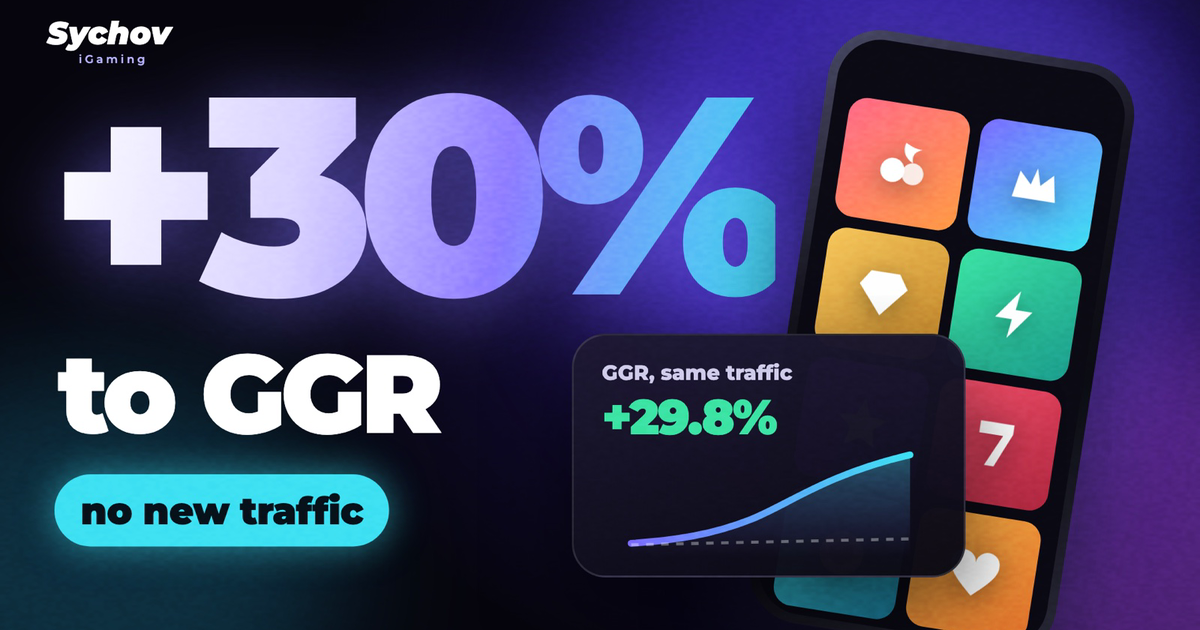
Personalisation in a casino means decisions made for a specific player at every step: what to show in the lobby, what amount to suggest in the cashier, which offer to send and when, and what not to send at all. Below are 10 such decisions on a model casino: together they add 15 to 30% to GGR without a single new player.
Two players, one traffic source
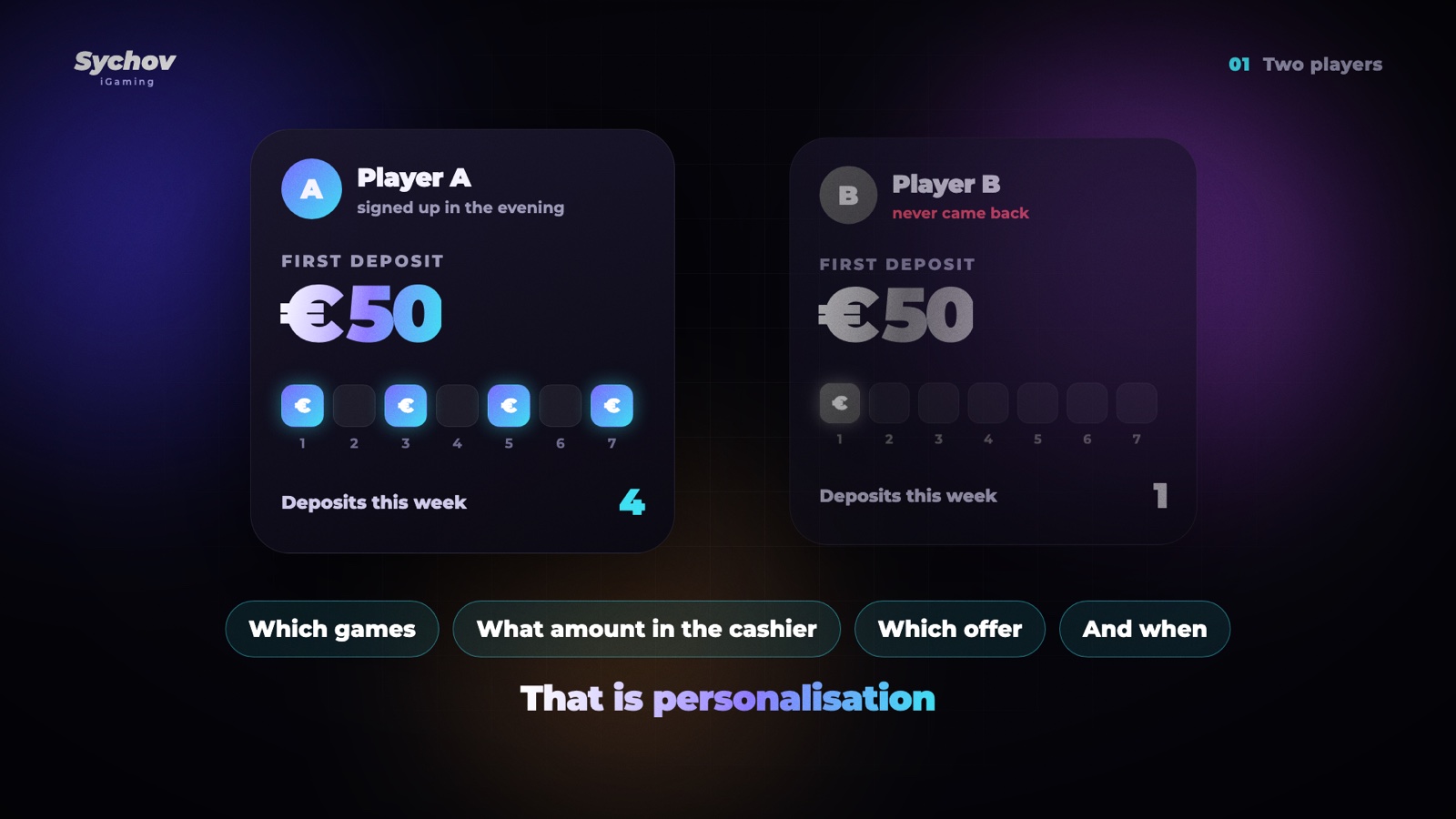
Two players deposited €50 each on the same evening. A week later the first came back and deposited three more times; the second was never seen again. Same traffic, same bonus.
The difference is what each of them saw: which games, which amount in the cashier, which offer and when. That is personalisation.
Four GGR multipliers
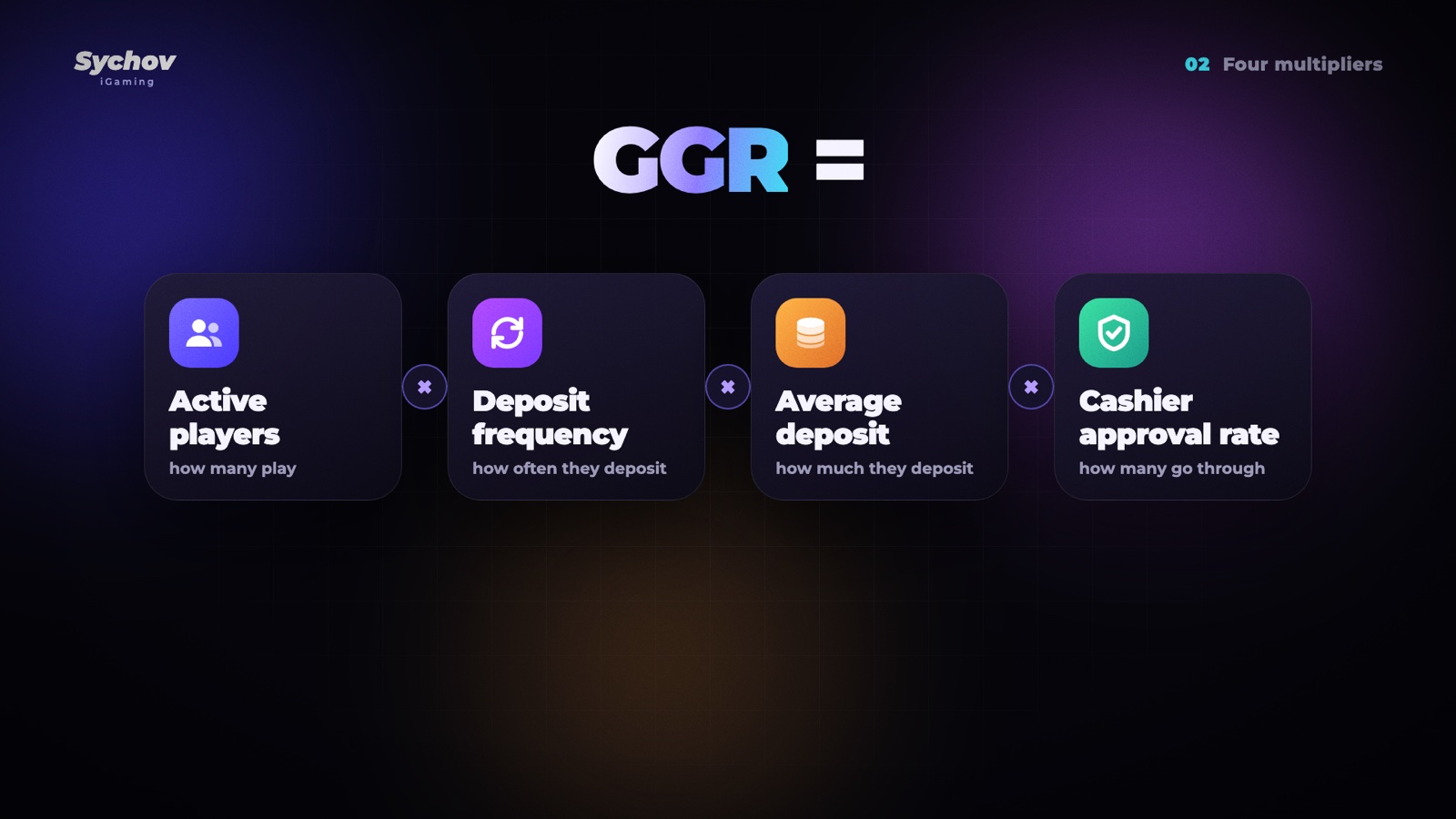
Personalisation is not lobby recommendations. To see where it makes money, break GGR down into four multipliers.
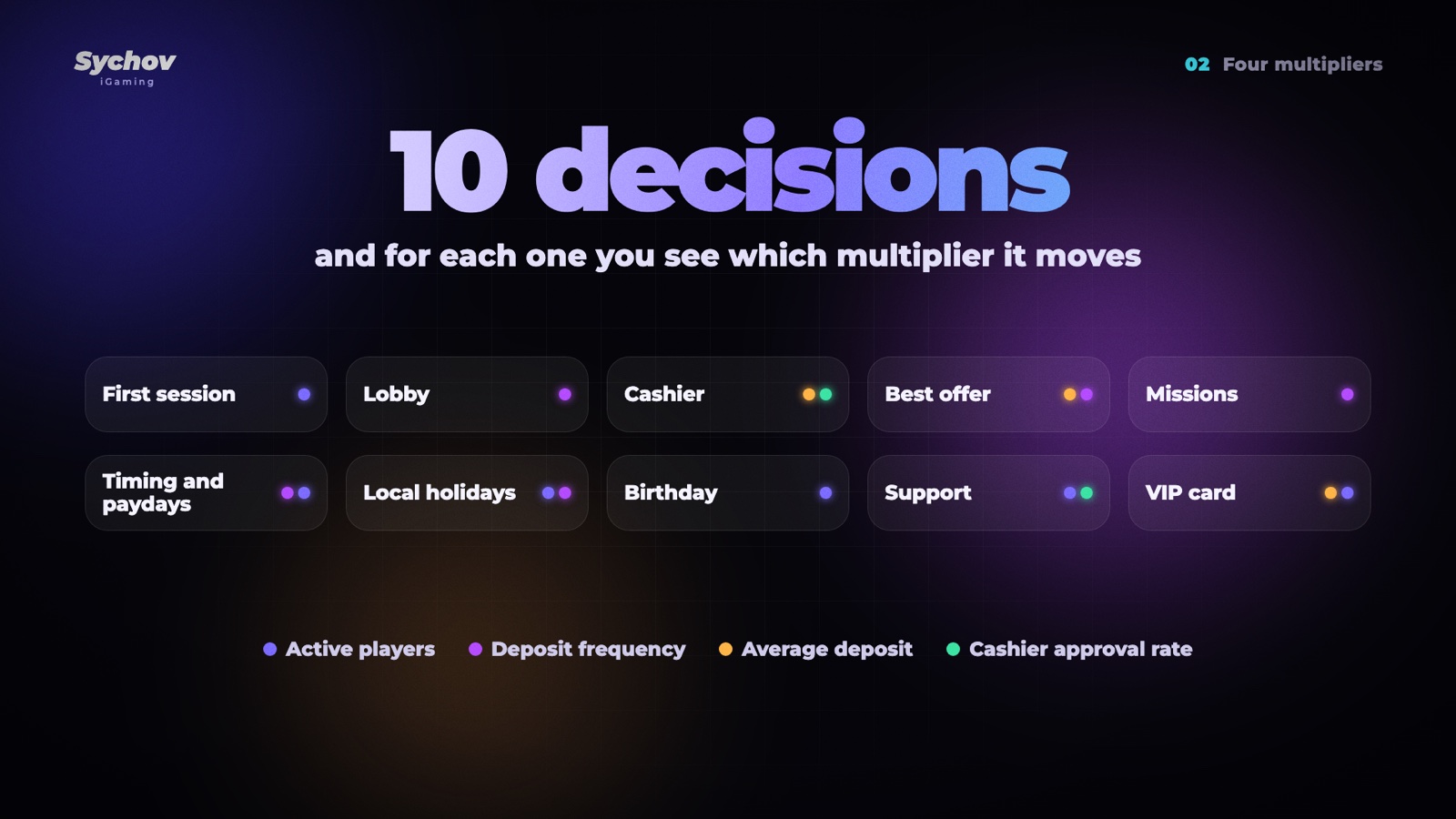
This is a model of a hypothetical casino, not data from a specific operator. Next come 10 decisions, each with the multiplier it moves.
The player profile
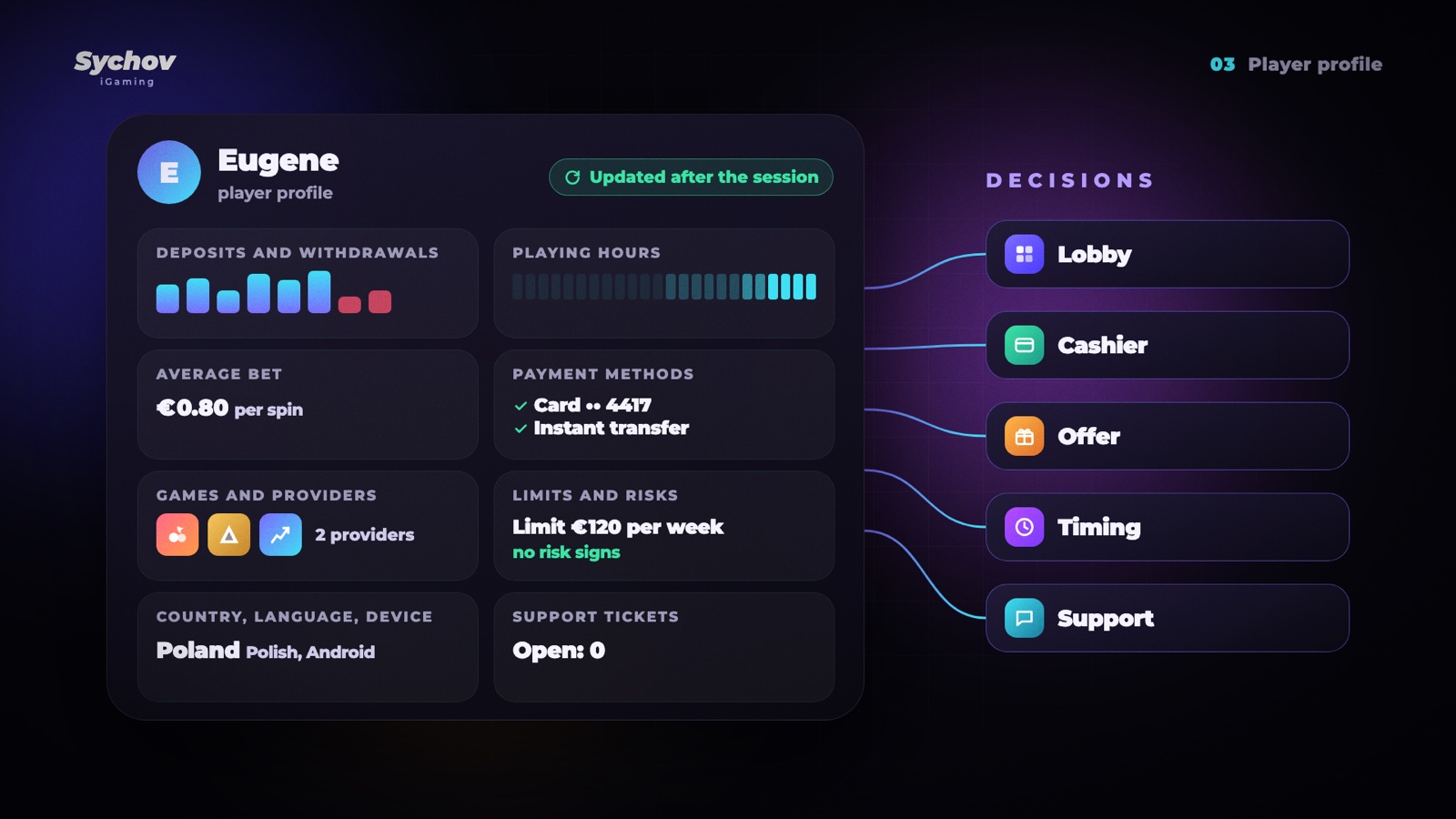
It all starts with the profile. The minimum without which there is no personalisation: deposit and withdrawal history, average bet, favourite games and providers, country, language and device, playing hours, payment methods that go through, limits and risk signals, open support tickets.
The profile updates after every session, so the decisions change along with the player. Without data, a decision becomes a template.
The first session
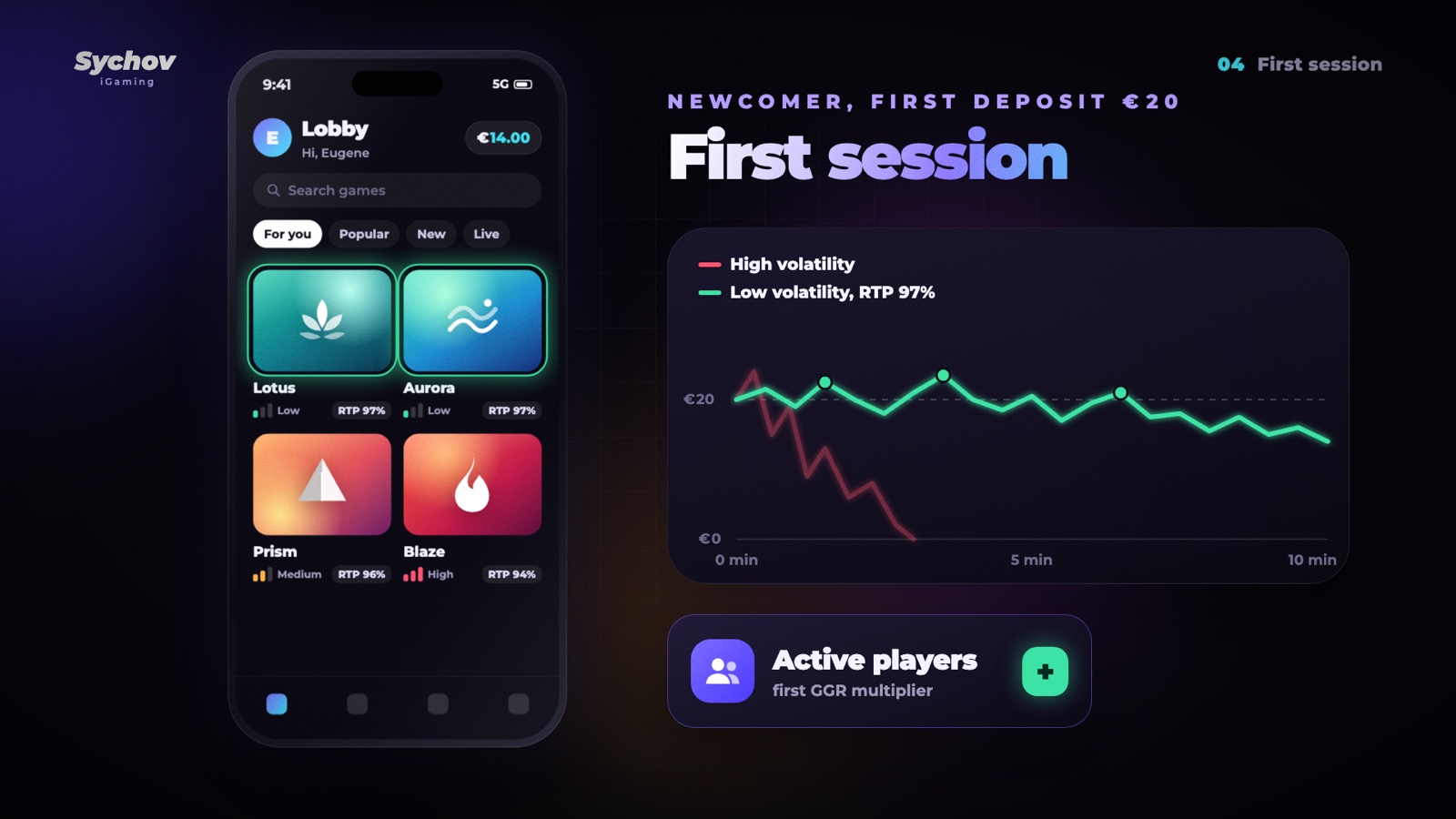
A newcomer deposits €20 and opens the lobby. If the first game is highly volatile, the deposit is often gone in a few minutes, and the player draws conclusions about the whole casino.
So at the start we rank low-volatility, high-RTP games higher: the deposit lasts longer, the player sees wins and learns the product. And only games available in their country. Multiplier: active players.
The lobby learns
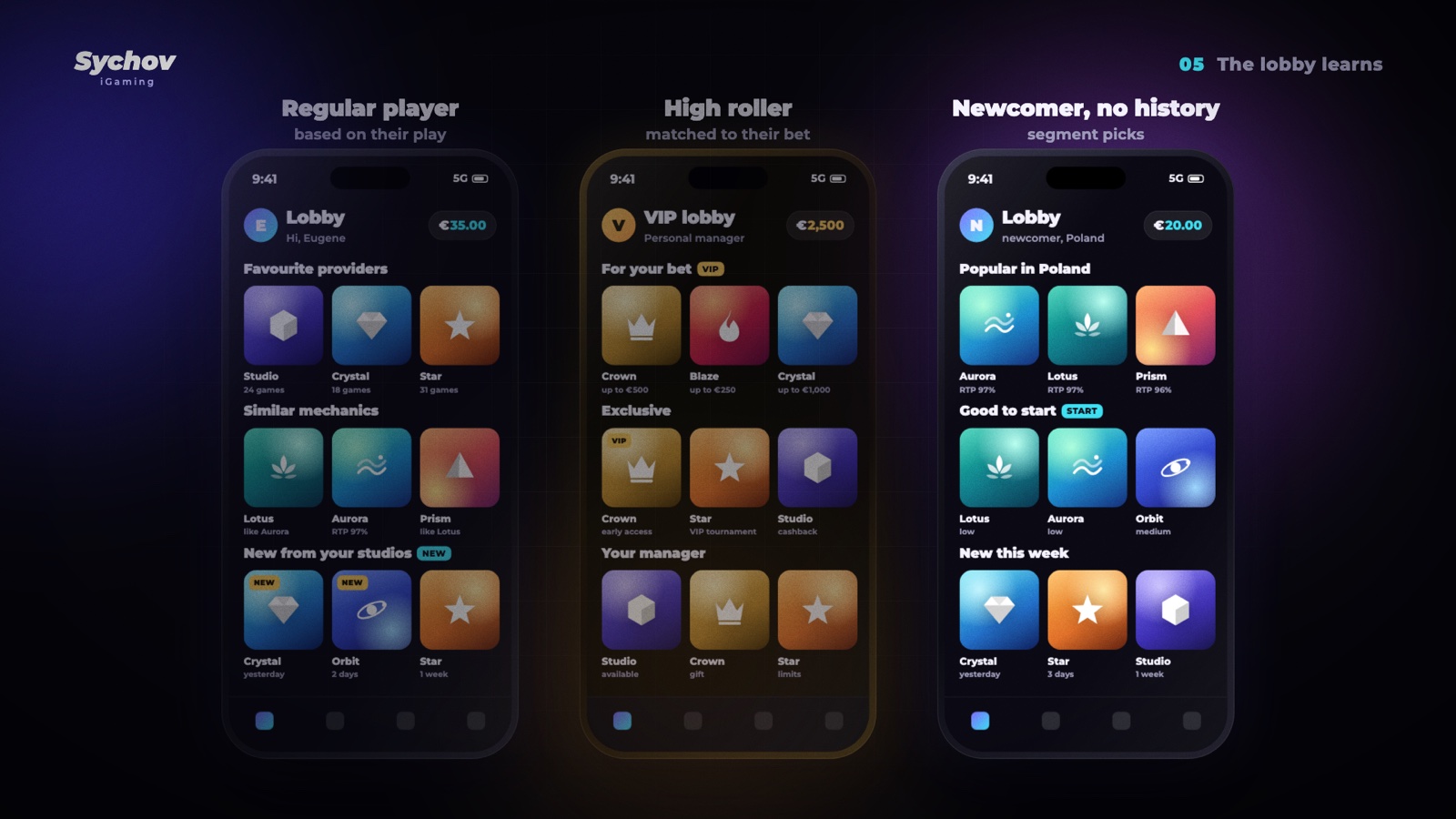
Then the lobby learns from their play. Favourite providers, games with similar mechanics and new releases from studios they already play move up. A high roller sees games where their usual bet fits the limits.
A newcomer with no history gets the ranking of their segment until their own data appears. The player finds their games faster, starts sessions sooner and comes back more often. Multiplier: deposit frequency.
Cashier
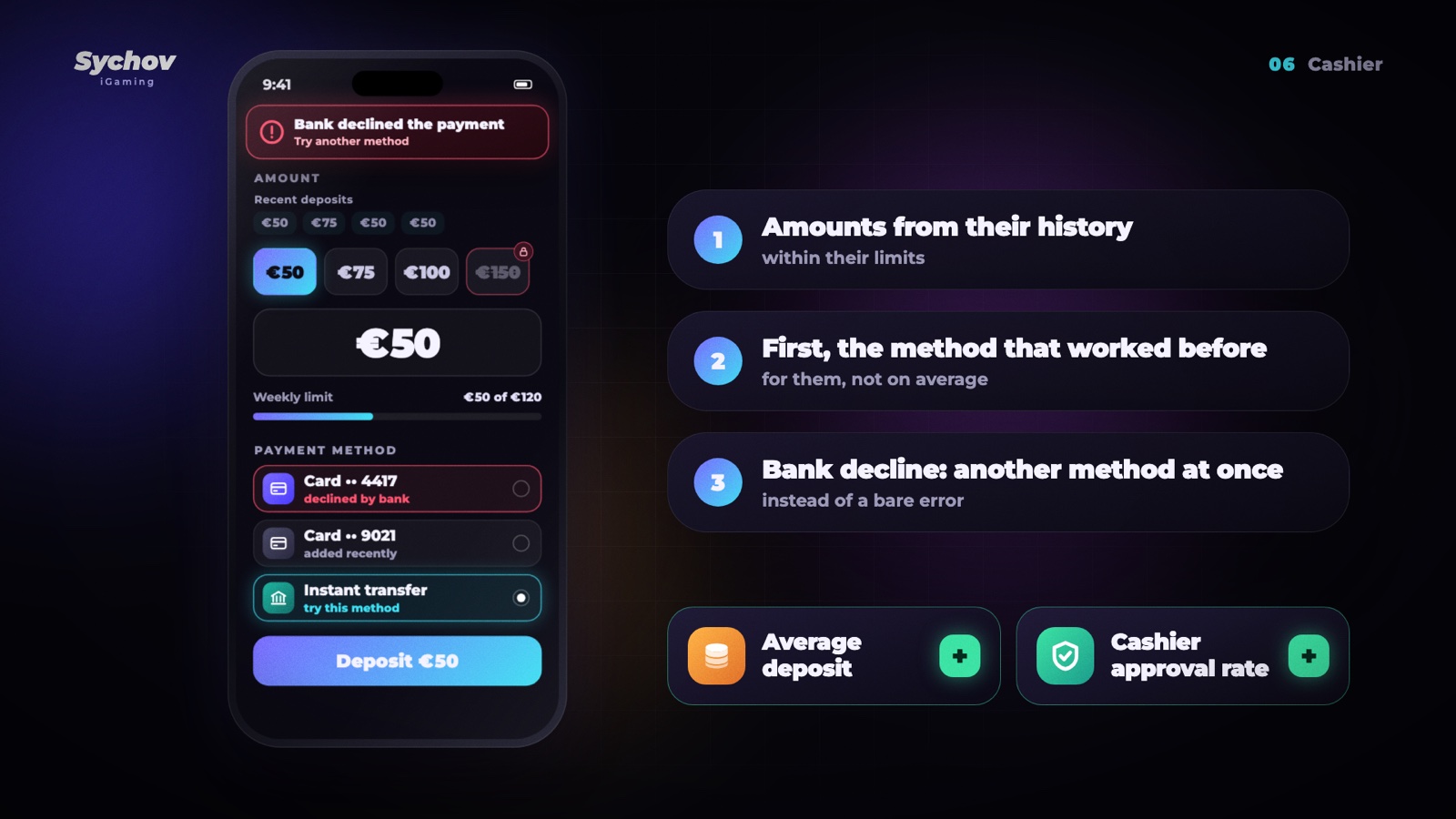
Last time the player deposited €50, yet the cashier suggests €20 by default. So the amounts come from their history, within their limits. The payment method that already worked for them goes first.
And if the bank declines, we do not show a bare error but offer another method right away (cascading). Two multipliers grow at once: average deposit and cashier approval rate.
Not a bonus for everyone
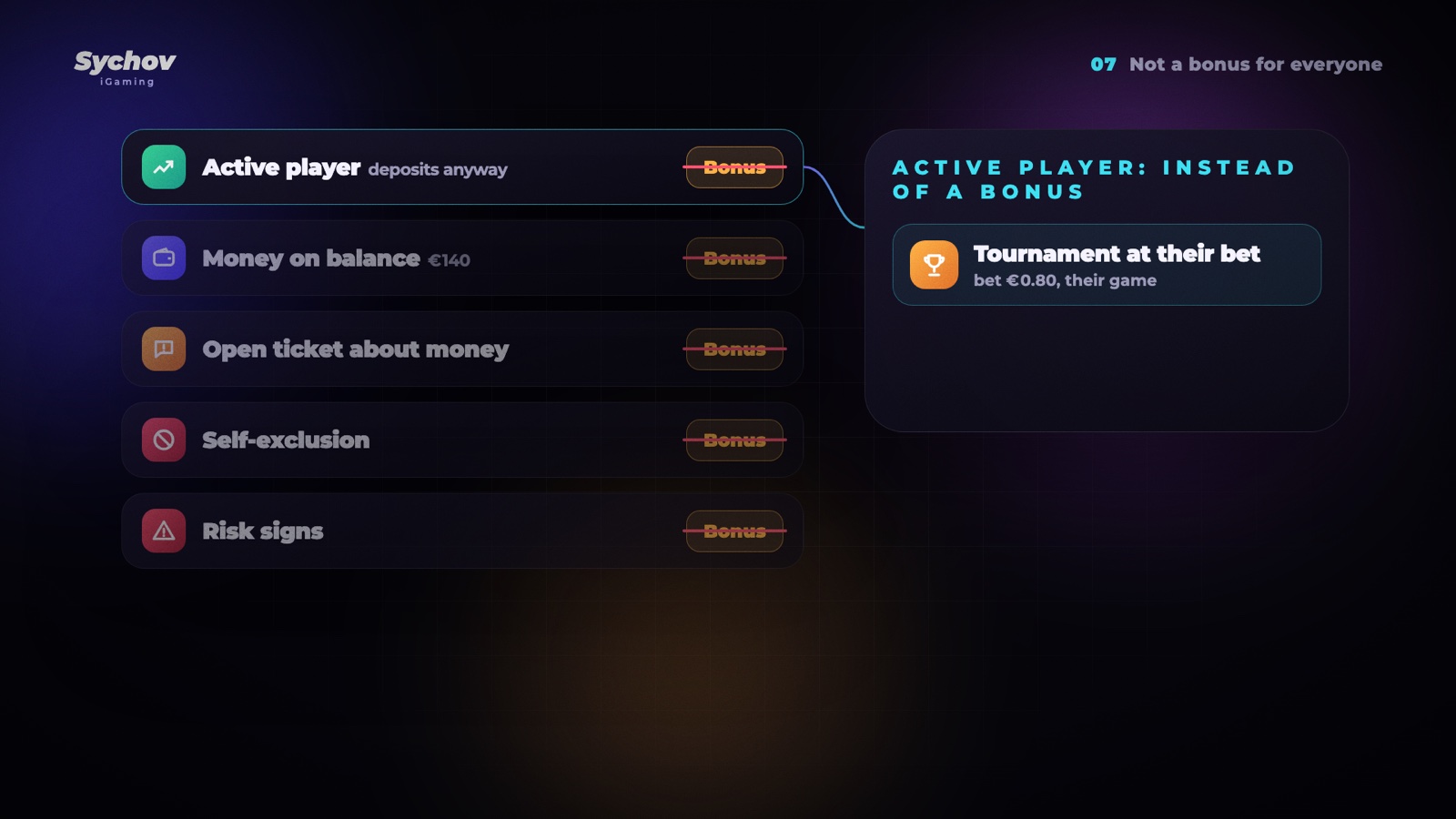
The most expensive bonus is the one given to a player who did not need it. An active player who deposits anyway, a player with money on the balance, with an open ticket about money, with self-exclusion or risk signals: none of them get a personal bonus.
An active player is better served by product: a tournament at their bet or a new game from a favourite provider. Bonuses go to those who really need them. Bonus Rate drops, and the saving shows up in NGR.
One best offer
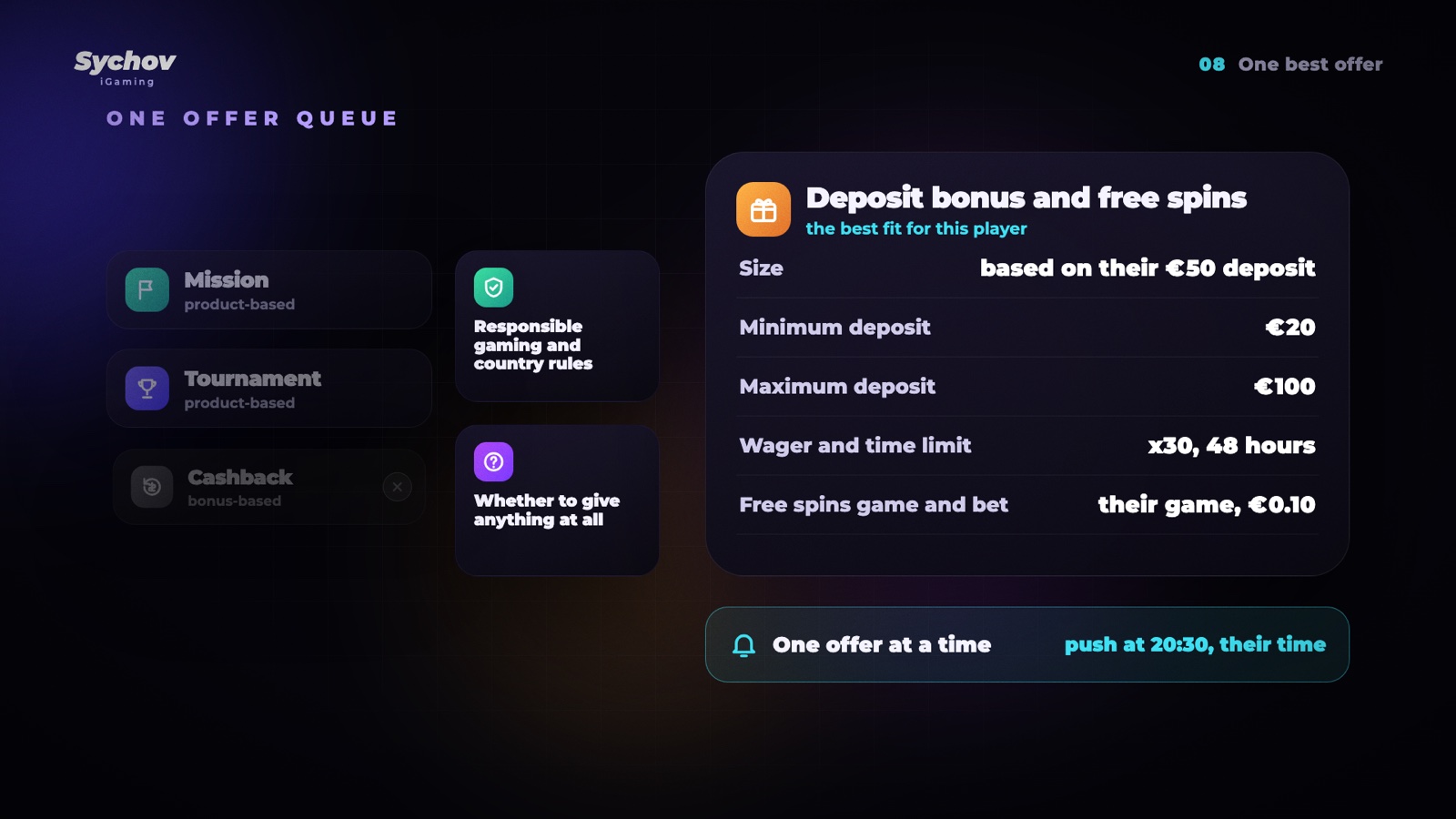
A player has a bonus, a tournament, a mission and cashback all at once, and takes none of them. So all offers, bonus and product alike, sit in one queue. First the responsible gambling and country rules filter, then the decision whether to give anything at all.
Then the size based on their usual deposit, the minimum and maximum deposit, the wagering requirement and a time limit to match it, the game and the free spin bet. And the player gets one offer at a time, in their channel and at their time.
Missions that pick the reward
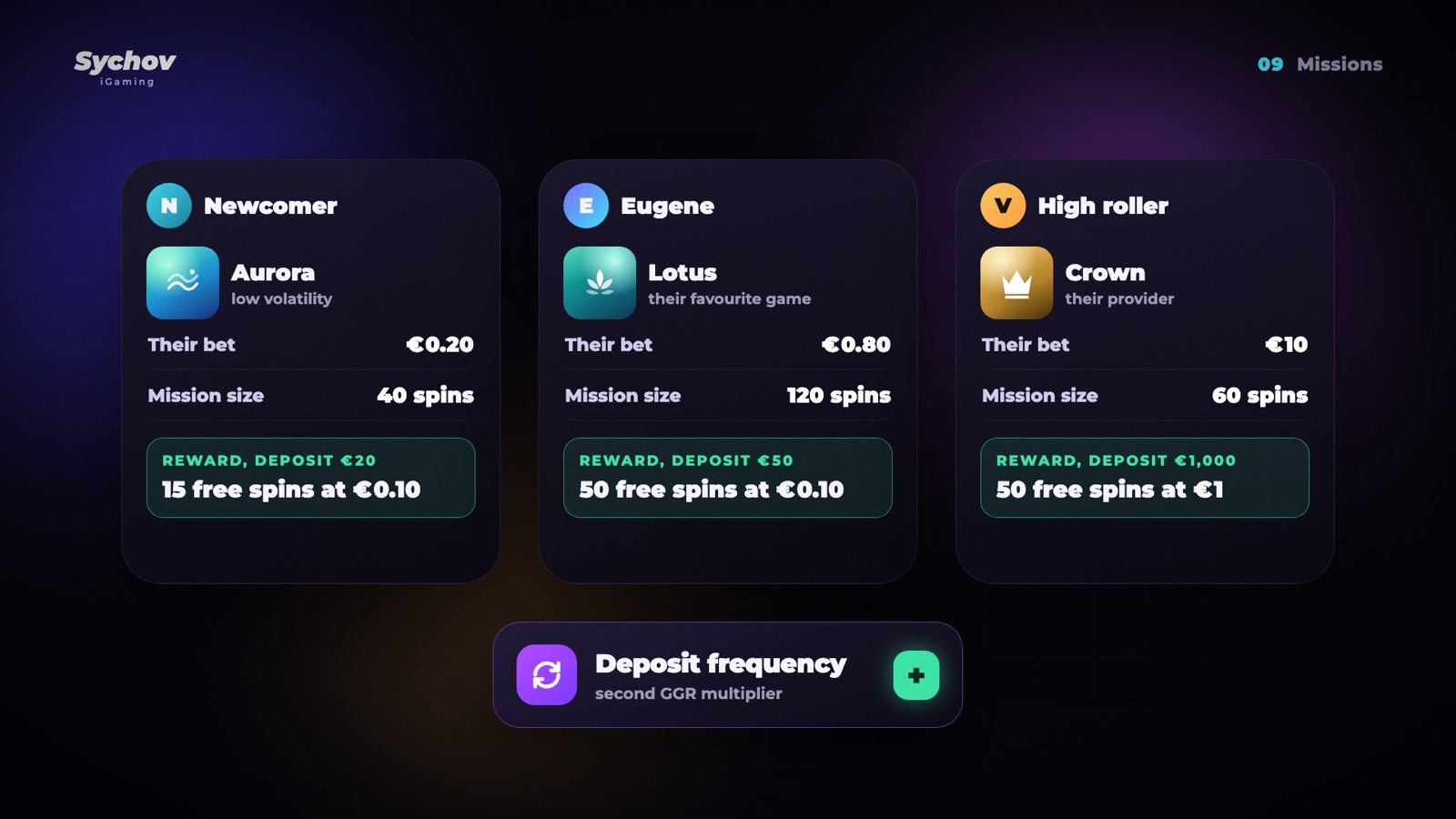
Gamification. One mission for everyone, say 100 spins at €1, does not work: too much for a newcomer, boring for a high roller. So the system builds the mission: in their favourite game, at their bet, the size of their usual session.
The reward is also based on their usual deposit: just enough to bring them back tomorrow. That is how deposit frequency grows.
Timing and paydays
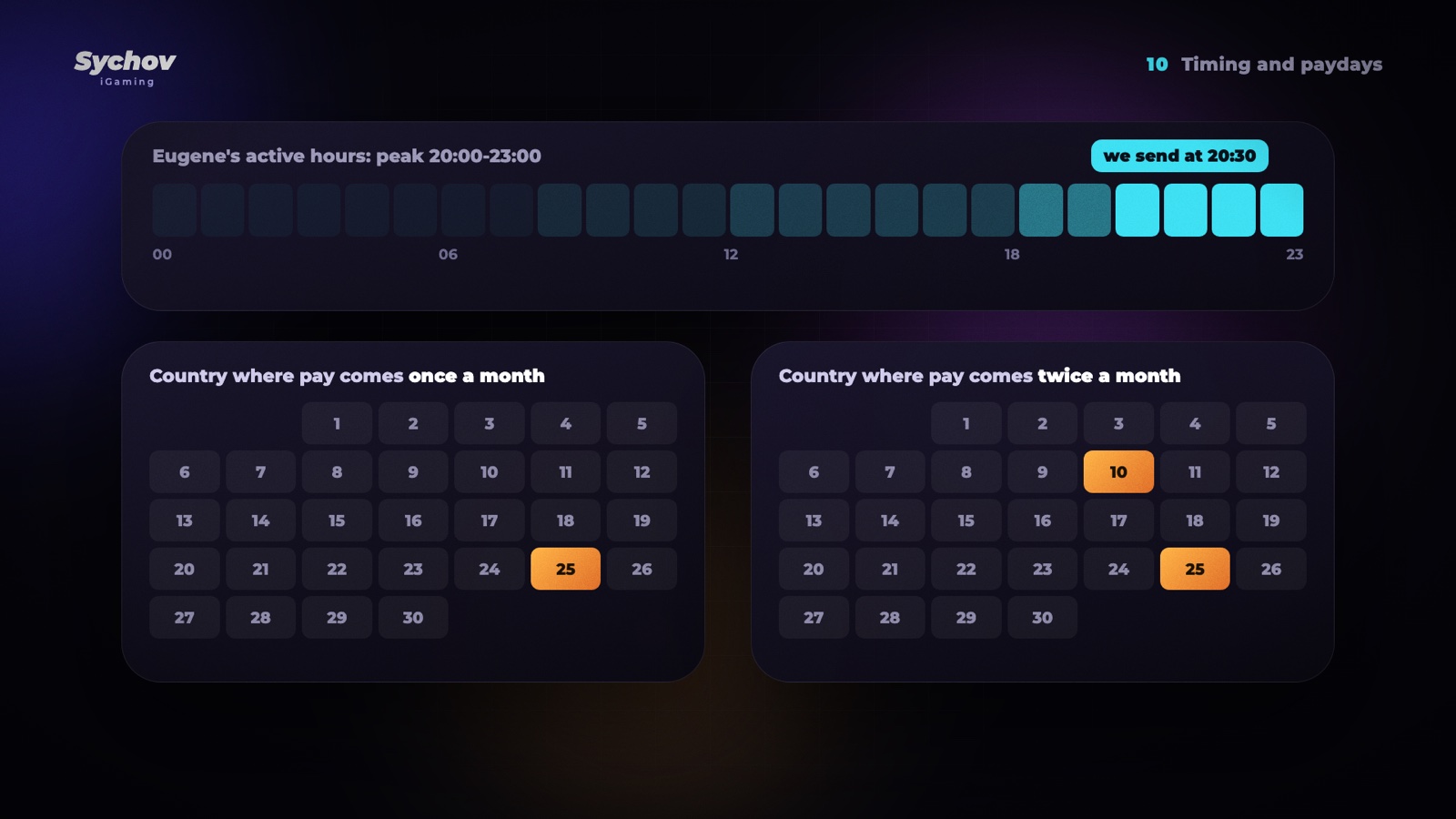
A message that arrives at 3 a.m. goes unseen. So the CRM writes during the player's active hours and schedules big offers for paydays in their country: in some countries salaries are paid once a month, in others twice.
Plus triggers on their behaviour: an unfinished deposit, a broken rhythm, a first session without a game. That is deposit frequency and active players.
Country holidays
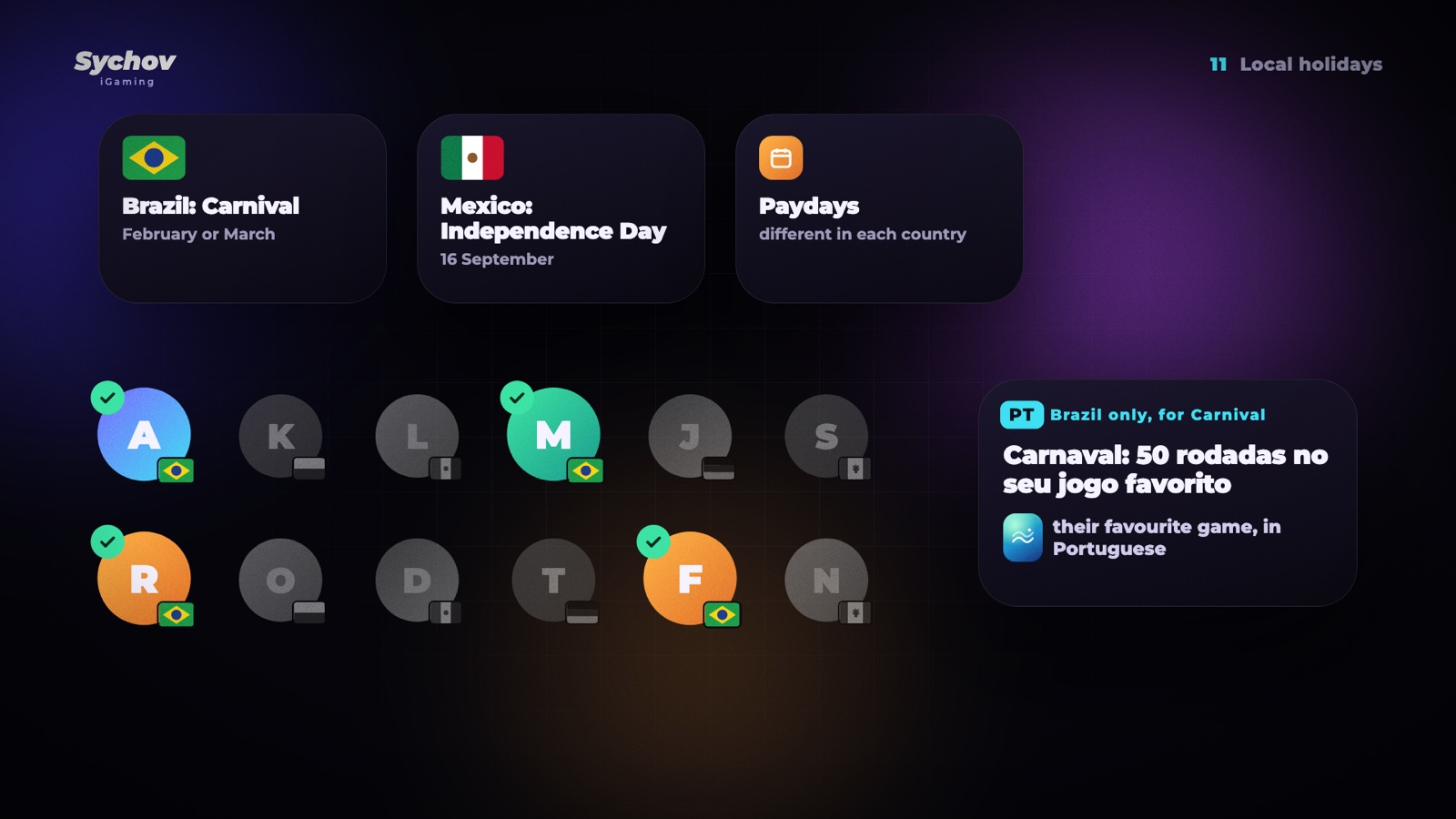
A holiday mailing went to everyone, yet half of the players do not celebrate it. So every country has its own calendar: carnival in Brazil, Independence Day in Mexico, its own paydays.
Only those who have the holiday get the offer, in their language and with their favourite game.
A birthday for everyone
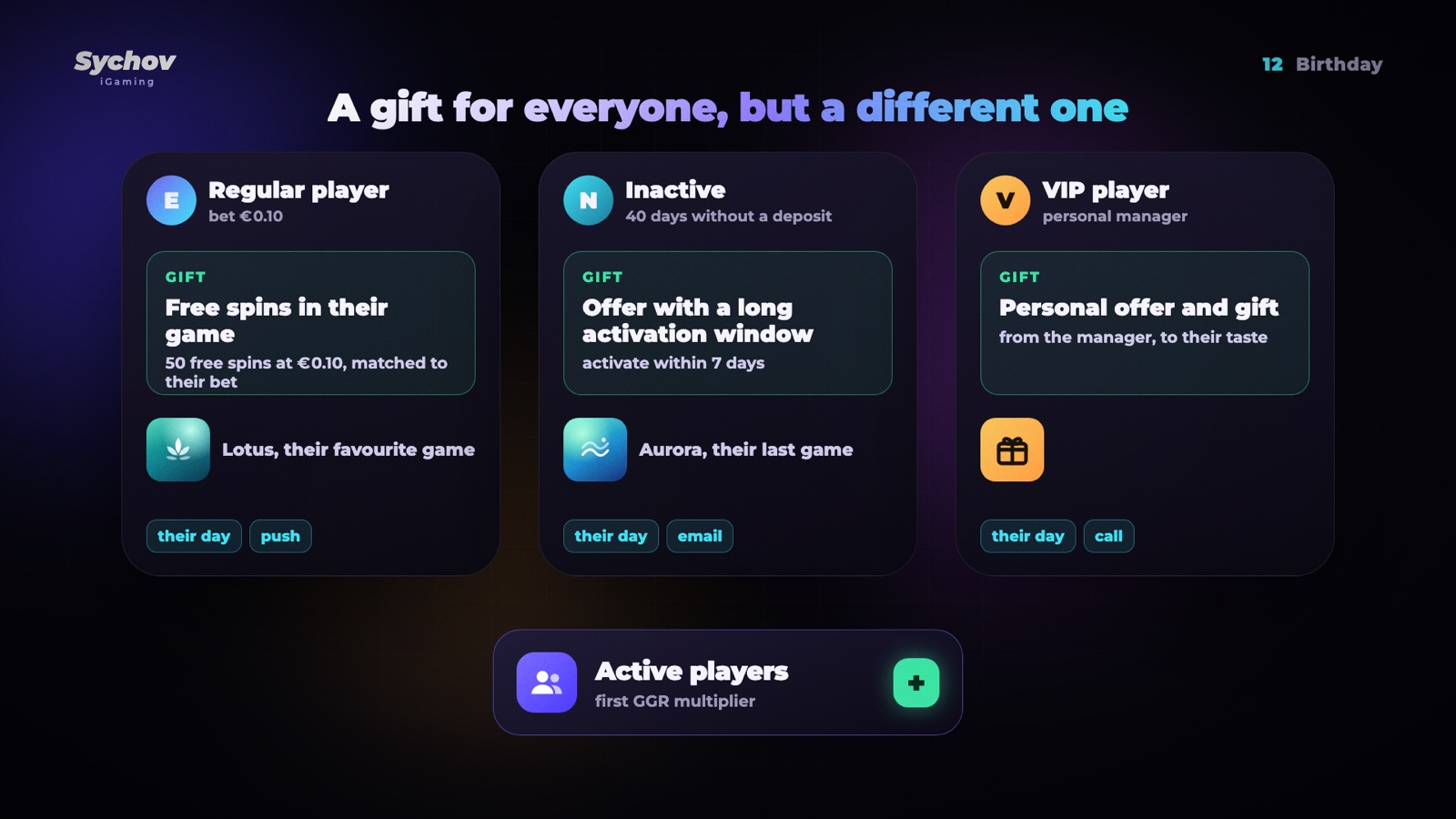
Usually only VIP players get a personal greeting, and everyone else gets a template or nothing. Everyone needs a gift, but a different one.
A regular player gets free spins in a favourite game at their bet. An inactive one gets an offer with a long activation window so they have time to come back (reactivation). A VIP gets a personal offer and a gift. On their day, in their channel. That is how the number of active players grows.
Support with context
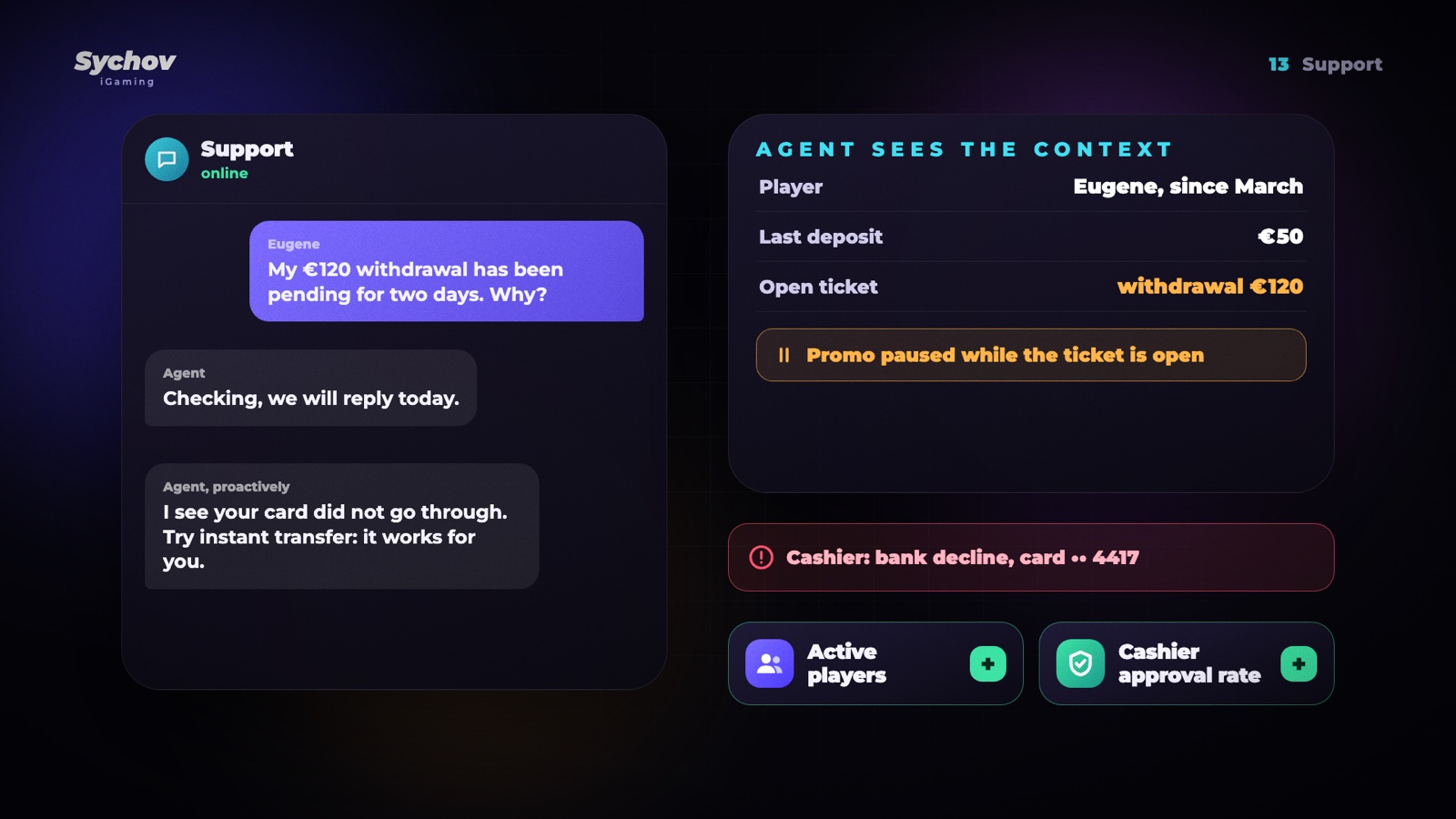
A player's withdrawal is stuck, they write to support, and an hour later the CRM sends them a bonus promo. After that the player leaves. So the agent sees the player's context, and while a ticket about money is open, no promos go out (contact policy).
And the other way round: after a cashier decline, support writes to the player first and suggests a method that works for them. That is active players and cashier approval rate.
The VIP client card
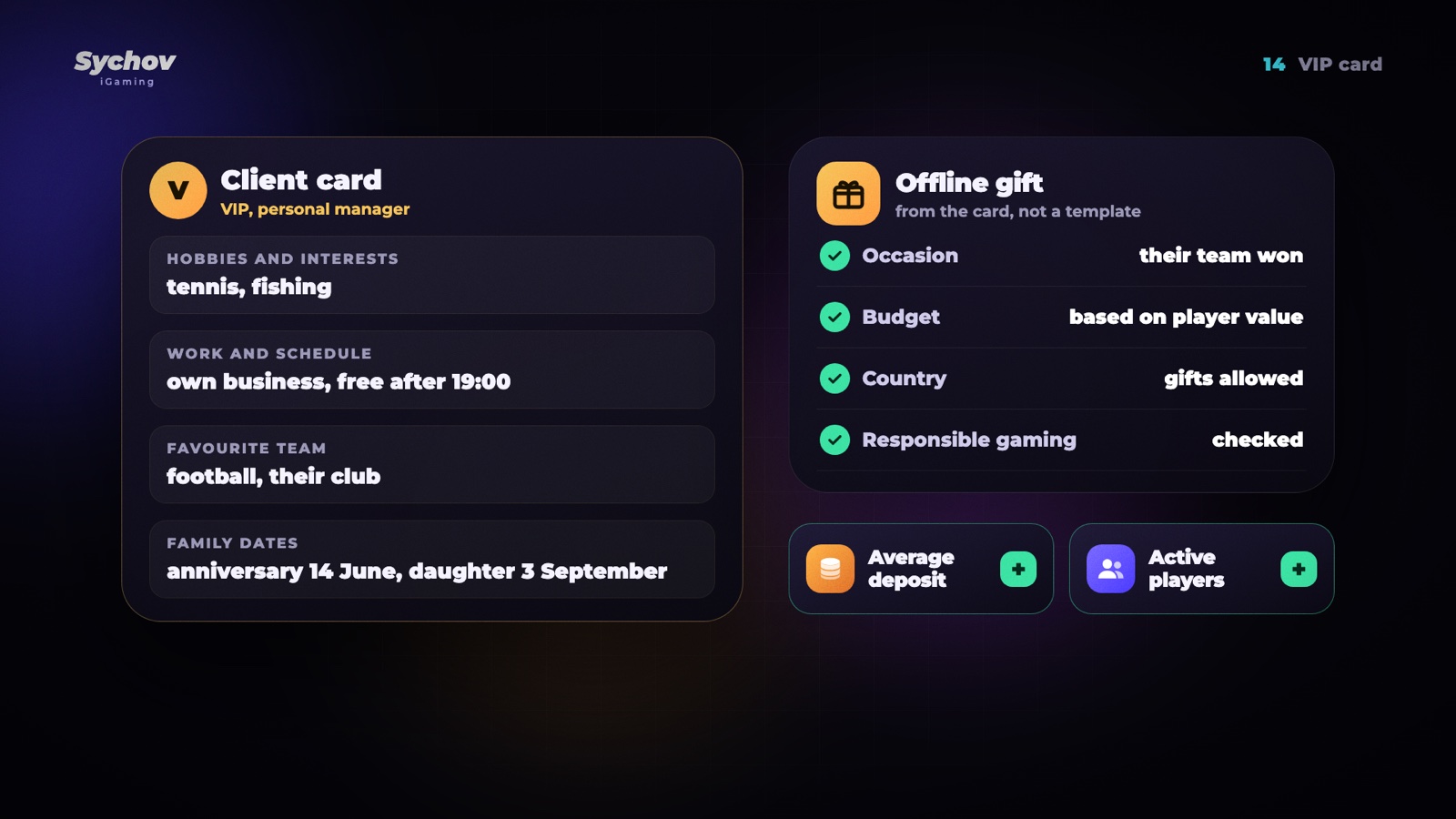
A VIP manager knows more about the client than the CRM records, and everything unrecorded leaves with the manager. So everything goes into a client card: hobbies and interests, work and schedule, favourite team, family dates.
The card produces offers and offline gifts: for an occasion, with a budget based on the player's value, only where gifts are allowed, and after a responsible gambling check. That is average deposit and active players.
+14.7% and +29.8% with no new players
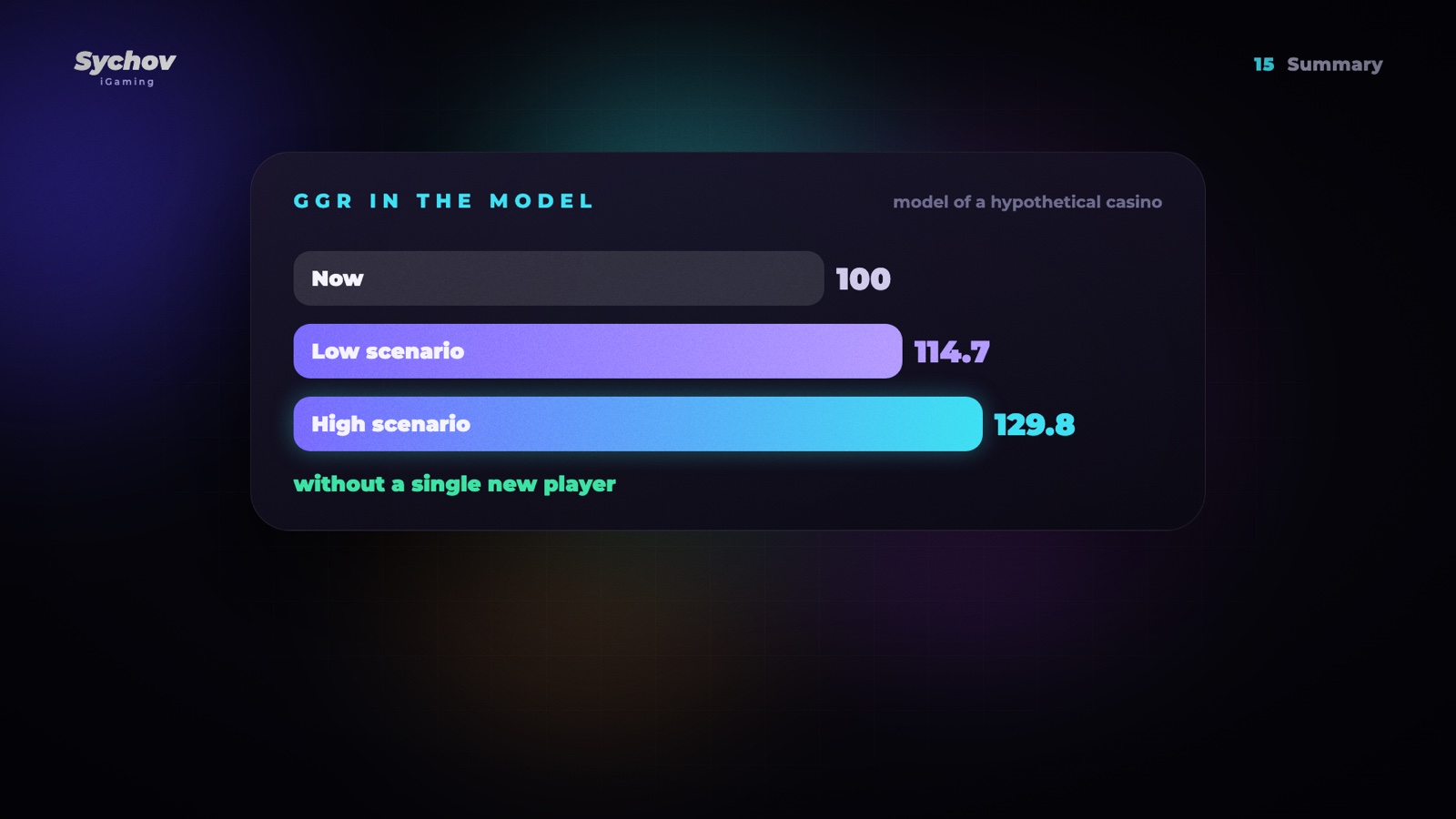
Each decision moves its multiplier by a few percent. In the model's low scenario each multiplier grows by 3-4%, which adds up to +14.7% GGR. In the high scenario it is 5-8% per multiplier, +29.8% in total. Without a single new player.
Bonus savings are counted separately, in NGR. You can check what a specific bonus costs in the bonus cost calculator.
Frequently asked questions
What is personalisation in a casino?
Decisions made for a specific player at every step: which games to show, which amounts to suggest in the cashier, which offer to send and when, and what not to send at all. The data for these decisions comes from the player profile.
How much does personalisation increase GGR?
In a model casino, 10 decisions add between +14.7% and +29.8% to GGR with no new players: each of the four multipliers grows by a few percent, and the multipliers compound. The real effect is measured against a control group.
Where do you start with personalisation?
With the player profile: deposit and withdrawal history, bets, favourite games, country, playing hours, payment methods, limits and tickets. The first quick wins are a cashier with amounts from history and a lobby built for the first session.
How is personalisation different from segmentation?
Segmentation splits players into groups with shared rules. Personalisation tailors the decision to a specific player inside the segment: their game, bet, amount, channel and timing.
Should every player get a bonus?
No. Active players, players with money on the balance, with an open ticket about money, with self-exclusion or risk signals do not get a personal bonus. An active player is better served by product: a tournament or a new game from a favourite provider.
The bottom line: personalisation needs no new traffic. It moves the four GGR multipliers for the players you already have, and bonuses go only to those who need them.
21+. For industry professionals, not gambling advertising. A model of a hypothetical casino, illustrative figures.
 Next breakdownCasino retention audit checklist: 52 questions in 11 zonesA 15-minute casino retention audit: 52 questions in 11 zones, from the first deposit to VIP. Answer yes or no, count the no answers per zone and start with the weakest.Read